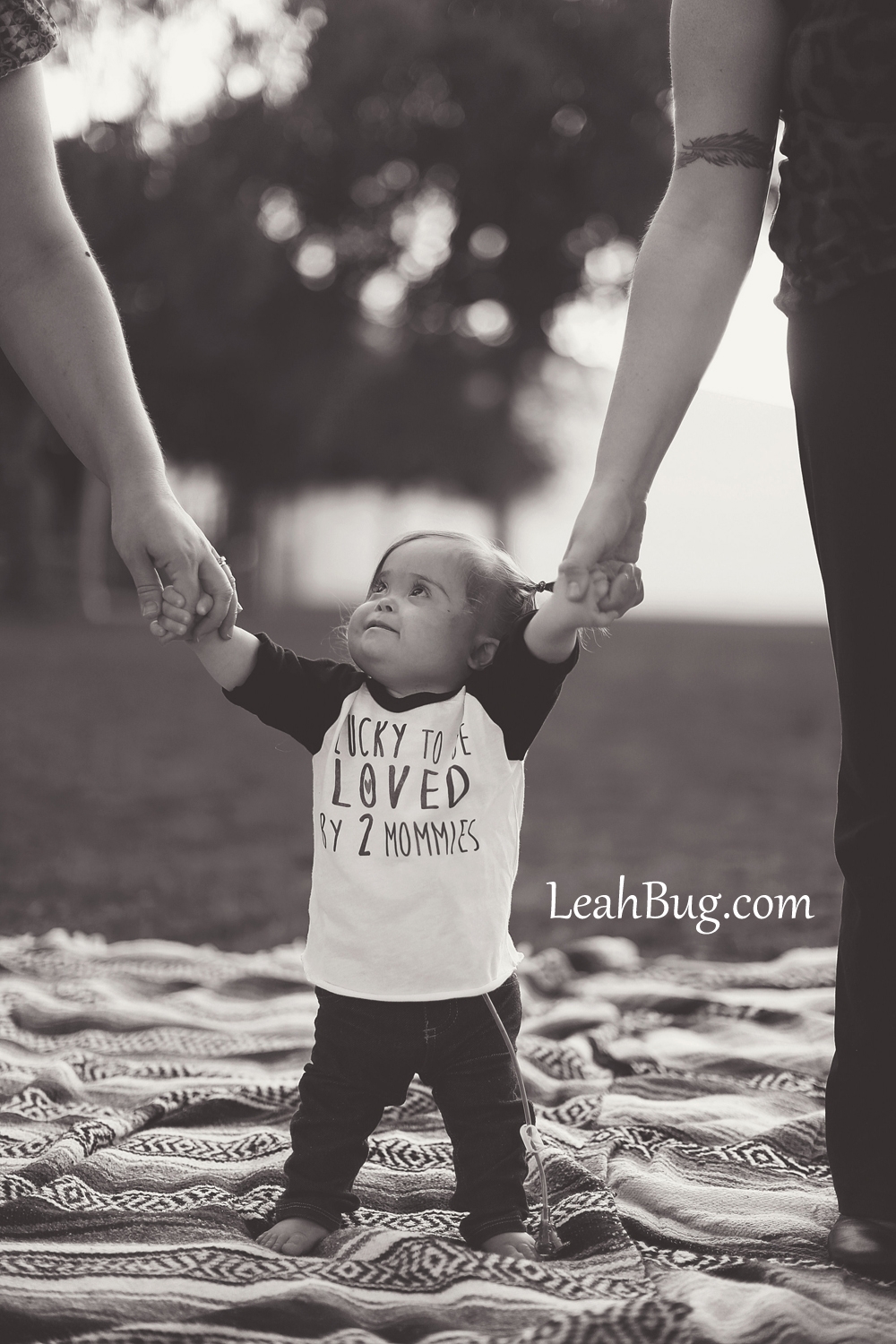
Today’s question: What has been the hardest part of having a child with Down syndrome?
I have three answers to this question.
1) I’ll get the shortest one out of the way – it has been pretty difficult to resign myself to the fact that I will likely never have grandchildren. Women with Down Syndrome can have babies, but even if it were advisable developmentally for Leah as an adult, her unique health issues would likely get in the way of a safe pregnancy. That’s a hard pill to swallow, but it is what it is.
2) The uncertainty that comes along with all of Leah’s health issues can be very difficult. It’s not really clear how much can be attributed to Down Syndrome and how much can be attributed to Leah’s lottery-winning combination of health conditions, which is exceedingly rare even among children with Down Syndrome. Out of the hundreds or even thousands of families I’ve come across in person and on social media, I know of exactly one other child with the combo of Type A esophageal atresia, Down Syndrome, congenital heart defect, and Morgagni diaphragmatic hernia. But the comparatively higher risk of leukemia and the high risk of pneumonia are certainly both always in the back of our minds, especially during cold and flu season. And then there are all the usual fears that parents have – accidents, injuries, and the like. For kids with developmental disabilities there is also an increased risk of sexual abuse, partially because they are more vulnerable to manipulative adults, and partially because they often don’t have the words to communicate what has happened to them. And then there is the thought of what will happen to Leah if/when we are no longer here to take care of her. Public supports can only go so far, especially if the current regime gets its way. All in all, worry and uncertainty are a difficult part of having a child with a disability in general, not just Down Syndrome. And really, aren’t they a part of having children, period?
3) I would argue that the absolute hardest part of having a child with Down Syndrome is having to constantly confront assumptions about and low expectations for your child, especially when the people you’re confronting are the decision makers and gatekeepers for the services to which your child has access. I don’t understand why someone goes into special education if they believe that children with developmental disabilities don’t need a meaningful education. It baffles me. I don’t understand why agencies have to be on a race to the bottom as far as what services they provide. It makes no sense that parents ask for something to which their child is entitled and agencies say, “oh no, that’s not our policy.” Sorry, it’s not your policy to obey the law?
Along the same lines, it’s also appalling that vulnerable populations (people of color, immigrants, families with low income, non-English speakers, families with less access to information, and others) often have reduced access to services and supports. I see this happening all the time. This is especially true if they live in heavily underfunded school districts and catchment areas, but I think overall it’s mostly because agencies will say no to them just to see if they can get away with it. People with fewer social and economic resources are less likely to know their rights, and also less likely to be comfortable rocking the boat to get what they need. And sometimes agencies will rely on a person’s appearance, skin color, English language skills, or even age as a proxy for estimated knowledge of their child’s rights. One way to counter this tendency is for parents who have knowledge and experience with the system to network and share with parents who don’t. To this end, social media has been a major game changer, although it can’t fix everything. There are also nonprofits who do community outreach in multiple languages to advise families of available services and appeal rights. But the problem is still there.
I think that pretty much sums it up for me. Other parents can feel free to chime in. I do want to say that while raising a child with Down Syndrome is not all rainbows and unicorns, Leah is absolutely, without question, worth every second of it. I don’t ever want someone I know to get a prenatal T21 diagnosis and think to themselves, “Oh, but look how much they went through with Leah.” Raising a child is no picnic, regardless of ability. That’s just the reality of it. But Leah was exactly the child we were meant to have, and she is worth every hurdle we have to jump to help her reach her potential.